

January has a way of stirring big questions.
After the holidays, many professionals return to work feeling reflective, restless, or quietly dissatisfied. New year energy makes it easy to think, “Maybe this is the year I finally move on.”
If you’ve found yourself Googling should I look for a new job now, you’re not alone.
But this decision deserves more than a burst of motivation. The real question isn’t just whether you should leave — it’s whether you’re positioned to move well.
Changing roles can be transformative. It can also be draining, discouraging, and costly when done reactively.
This guide will help you decide whether now is the right time to act, or whether a smarter move is to prepare first.
Why Your Job Search Feels Tough Right Now
January feels like the perfect moment to start fresh. It’s also the most competitive time of year for jobseekers.
It consistently sees the highest volume of applications and some of the lowest levels of new job openings. That means more candidates competing for fewer roles. Response times slow, rejection rates increase, and even highly qualified professionals can struggle to get noticed.
If you’re thinking about changing jobs, this doesn’t mean you shouldn’t try. It means you shouldn’t rely on volume alone.
The people who succeed in crowded markets aren’t the ones submitting the most applications. They’re the ones who are most visible, most prepared, and most aligned with what employers are actively searching for.
Understanding how to change jobs is just as important as knowing when.
How to Prepare for Your Job Search
If your dissatisfaction feels vague, situational, or driven by exhaustion, jumping straight into applications may not be the most effective move.
In many cases, the smarter first step is to create clarity and leverage before you make a visible exit.
This is especially true if:
- You’re unsure what your next role should be
- Your CV hasn’t been updated in years
- Your LinkedIn profile doesn’t reflect your current goals
- Your professional network has gone quiet
When any of these are true, applying immediately often leads to frustration rather than progress. Instead of reacting, use this phase to position yourself intentionally.
That shift doesn’t require disappearing into “prep mode” for months. It means putting a few high-impact foundations in place so every future move works harder for you.
Clarify Your Direction
Define what you actually want next. Role type, industry, work style, and growth path. Without this, even strong opportunities can feel misaligned.
Rebuild Your CV Around Impact
Move beyond task lists. Highlight outcomes, results, and the problems you’ve solved. Your CV should make your value obvious within seconds.
Optimise Your LinkedIn for Search
Recruiters increasingly rely on LinkedIn to find talent, sourcing around 72% of candidates through skills-based searches.
Roles like admin support, social media management, or other VA positions are highly dependent on this approach.
To make sure you’re visible, align your headline, summary, and experience with the roles you want to be found for.
A complete, detailed profile can double your job opportunities compared to an incomplete one, giving you a significant edge in competitive markets.
Reactivate Your Network
Reach out to former managers, peers, and mentors. Let people know what you’re exploring. Warm conversations open doors cold applications never reach.
Explore Adjacent Paths
This is also the right moment to look beyond your current lane, including flexible and remote options such as offshore virtual assistant jobs or hybrid roles that better align with your lifestyle and goals.
Job hopping among virtual assistants in 2025 showed moderate stability, with many businesses successfully retaining VAs for 2–5 years through targeted strategies, even amid high demand.
The average tenure across remote roles rose to 2 years and 1 month, up 5.8% from 2024, reflecting a shift toward more thoughtful career moves and economic caution.
While VA turnover remains a challenge driven by engagement and alignment, flexible contracts and intentional growth opportunities make these roles more sustainable than traditional positions.
These steps create momentum without pressure. They turn uncertainty into direction and put you back in control of how, when, and why you move next.
Industry Shifts are Accelerating Career Decisions
In some sectors, change isn’t just emotional. It’s structural.
Recent developments in parts of the Australian finance industry, for example, have seen adviser numbers decline as education and compliance requirements rise.
These aren’t short-term fluctuations. They reshape who can stay, who can enter, and what “career security” really looks like.
Shifts like these quietly redraw career paths. Roles evolve. Barriers increase. Entire job categories change.
They also expose an important divide between employers who treat people as replaceable, and those who build ethical, future-focused workplaces that invest in capability, stability, and long-term growth.
Moments like this prompt harder questions:
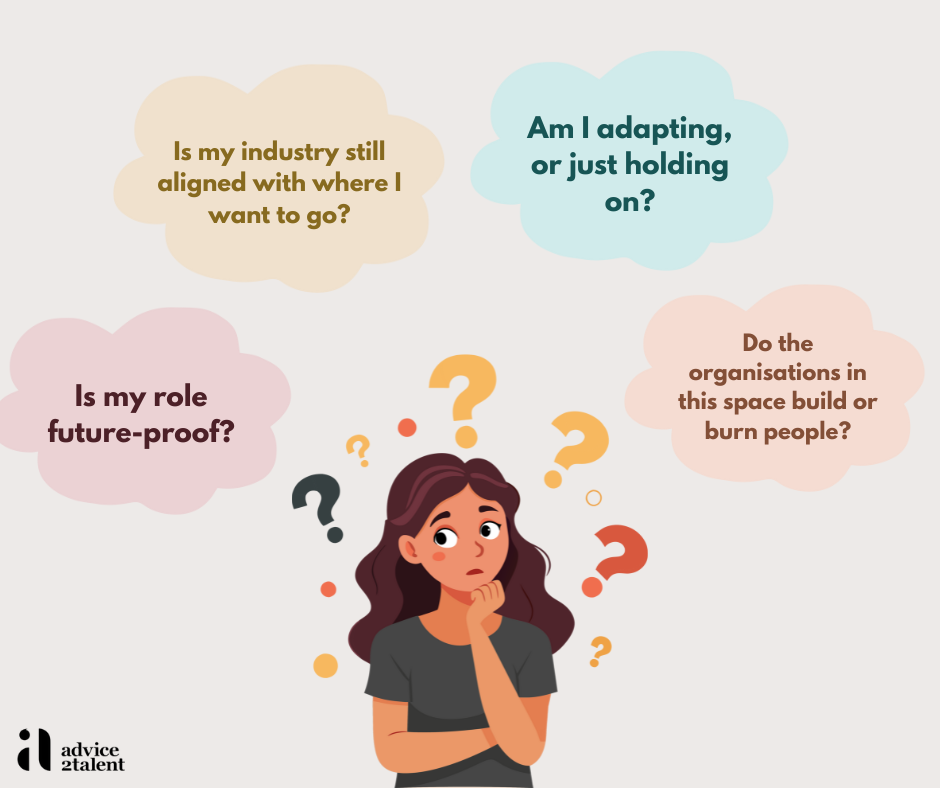
- Is my role future-proof?
- Is my industry still aligned with where I want to go?
- Am I adapting, or just holding on?
- Do the organisations in this space build people, or burn them?
In competitive markets, the difference matters.
Environments grounded in clear standards, fair treatment, and long-term thinking don’t just retain talent. They reduce churn, lower stress, and create space for people to do their best work over time.
If you’re feeling unsettled, it may not be personal at all. It may be the market signalling that it’s time to think more strategically about both your next role and the kind of employer you want to build a future with.
How Roles are Really Filled in 2026
Most people believe the job search is simple: apply, wait, repeat.
But recruiters tell a different story.
In reality, roles are usually filled in this order:
- Referrals and trusted recommendations
- Candidates discovered through LinkedIn searches
- Applications, reviewed only after the first two options are exhausted
That means most opportunities never start with a job board.
While many professionals spend the majority of their energy applying, recruiters are actively searching for people who already look right on paper.
If your profile doesn’t reflect the roles you want, you’re invisible — no matter how capable you are.
This is why so many people feel stuck despite working hard. The system rewards visibility, clarity, and alignment more than effort alone.
If you’re wondering how to know if it’s time to change jobs, start by asking whether your career tools are actually working for you.
Ask Yourself These Before You Apply
Before you update a single application, pause and reflect:
- Are you escaping a situation, or moving toward something better?
- Do you know what kind of role you want next, or just what you’re tired of?
- Does your CV show impact and outcomes, not just responsibilities?
- Would a recruiter searching today find you on LinkedIn?
- Are you disengaged because of the role, the manager, or burnout?
These questions help you separate impulse from intention. They reveal whether you’re ready to move, or whether you’re reacting to frustration.
When It Does Make Sense to Move Now
Sometimes, the answer really is yes, it’s time.
Looking for a new job now is the right choice if:
- You’re in a toxic or unsafe work environment
- Your values no longer align with your organisation
- There is no realistic path for growth
- Chronic disengagement is affecting your wellbeing
Leaving in these situations isn’t quitting. It’s protecting your future.
Did you know?
Baby Boomers stayed ~20 years per job, but Millennials and Gen Z now switch every 2–3 years. Remote gigs like virtual assisting fuel these “serial monogamy” careers, and job hoppers can earn 10–20% more over a decade than loyalists.
When Staying Becomes a Career Risk
Staying isn’t neutral. When reflection slips into disengagement, the impact begins long before any resignation letter is written.
People pull back, confidence erodes, and performance starts to dip in ways that are hard to reverse.
Most professionals don’t leave because the work is unbearable. They leave because of weak leadership, poor communication, or a sense that they are drifting without direction.
For employers, replacing a team member can cost tens of thousands of dollars. For individuals, remaining stuck carries its own price in lost momentum, reduced confidence, and long-term earning potential.
Whether you decide to stay or move on, the real risk is letting the decision happen by default. Intentional choices protect both your career and your wellbeing.
So, Should I Look for a New Job Now?
There’s no universal “right” moment to resign. But there is a right moment to stop drifting.
January doesn’t need to trigger a flurry of applications. It’s more useful as a checkpoint. A chance to assess what’s working, what isn’t, and whether your current role still matches where you want to go.
If you’re ready, move with intent.
If you’re unsure, build leverage.
If you’re drained, change the conditions before you change employers.
Career decisions compound. The people who land well aren’t reacting to discomfort, they’re positioning themselves ahead of it.
If you’re considering a change in 2026, Advice2Talent can help you explore what’s next, sharpen your direction, and connect with roles that actually fit.
Articles You Might Also Like

Employee of Record vs Contractor: Which Hiring Model is Right for Your Business?
Choosing between EOR, contractor, direct hire, or freelancer? Learn the key differences, costs, and risks—including contractor misclassification—before you hire.

AI vs Offshore Teams: Which Tasks Should You Automate?
AI can automate tasks, offshore teams add human judgment—but where’s the line? Learn how to split workflows between AI agents and offshore teams for maximum efficiency.

Am I a Contractor or Employee in Australia? Understanding Sham Contracting
Not sure if you’re a contractor or employee? Learn how sham contracting works in Australia, key differences in work arrangements, and what it means for your rights and compliance.

Why Are Some Workers Paid More for the Same Job?
Salary differences often go beyond skill or performance. From labour hire to offshore back-office roles, we break down why some Australian workers earn more for the same job.

Why Businesses are Moving Remote Back Office Jobs to Asia
More companies are relocating remote back office jobs to Asia as part of a broader strategy to improve efficiency and access global talent. From finance and IT to administration and digital marketing, many operational roles can now be performed remotely without sacrificing quality or control. This article explores why businesses are moving back-office work offshore, which roles are best suited for remote teams, and how companies can manage distributed workforces successfully.

What SMEs Need to Know About Victoria’s Two-Day WFH Mandate
Victoria’s upcoming two-day WFH rights are set to impact SMEs from September 2026. Employees can work remotely two days a week, but businesses must plan strategically to maintain productivity, team cohesion, and compliance. Discover how hybrid policies, offshore teams, and AI workflows can turn legislative change into a competitive advantage.