


The Victorian government is set to legislate two days of work-from-home rights for employees starting September 2026, enshrining this into the Equal Opportunity Act.
While the policy is intended to promote fairness, reduce commuting time, and support families, it is prompting many small and mid-sized enterprises (SMEs) to rethink how they structure teams, manage productivity, and scale operations.
At Advice2Talent, we’ve been tracking these developments and advising SMEs on how to navigate this change strategically. We explore what the mandate means for SMEs and how businesses can turn it into a competitive advantage.
What is the New WFH Mandate in Victoria?
The Victorian WFH mandate gives employees who can reasonably perform their role from home the right to do so for two days per week, regardless of business size.
This means that flexible work arrangements are not just a perk for large corporations or Big Four firms – small and mid-sized businesses can also offer WFH without being restricted by headcount!
Why Small Businesses Should Care
While the policy promotes fairness, SMEs face unique operational considerations:
- Employees gain access to WFH rights, but some positions may still require on-site presence. Importantly, these rights apply equally to small businesses, ensuring flexibility isn’t locked behind size or scale.
- SMEs must ensure health and safety standards for home workspaces.
- Hybrid arrangements require deliberate strategies to maintain mentoring, collaboration, and team cohesion.
Understanding these implications is the first step in creating a sustainable SME hybrid work strategy that balances employee needs with operational realities and positions smaller firms competitively in attracting and retaining talent.
How Many Days Can You Work Without a Day Off in Australia
Although the Victorian WFH law focuses on two remote workdays per week, SMEs should also consider workload management and compliance with broader Australian workplace rules regarding rest days.
- Ensure employees are taking legally required breaks and rest days
- Plan WFH schedules so they do not unintentionally increase weekly hours or fatigue
- Communicate clearly to staff about expectations for productivity while remote
By aligning hybrid work policies with existing labor regulations, SMEs can maintain employee wellbeing while complying with the new WFH mandate.
Benefits of Hybrid Work for Employees in SMEs
The legislation is designed to provide meaningful advantages for employees. Beyond convenience, remote work can improve efficiency, satisfaction, and retention.
Remote work delivers measurable improvements for both staff and employers:
- Time and cost savings: Employees save money and hours by reducing commuting.
- Increased workforce participation: Flexibility supports parents, carers, and professionals managing multiple responsibilities.
- Productivity gains: Commuting time is converted into work hours, benefiting both employees and employers.
When employees experience these benefits, SMEs can enjoy higher engagement, loyalty, and overall workforce productivity, making hybrid work a strategic advantage rather than just a perk
Operational Challenges for Small Businesses
While employee benefits are clear, SMEs must navigate operational challenges to implement WFH effectively.
- Two-tier workforce: Back-office staff may work remotely, while operational or customer-facing roles cannot, potentially creating friction.
- Compliance responsibilities: Employers are responsible for health and safety in home workspaces, adding administrative oversight.
- Maintaining culture and collaboration: SMEs must intentionally foster mentoring, team bonding, and knowledge-sharing to prevent cultural drift.
Proactively addressing these challenges ensures SMEs maintain performance, culture, and cohesion while implementing hybrid work policies.
Insight
A two-tier workforce emerges when some employees can work from home while others must be on-site, a situation common in SMEs with mixed operational and administrative roles. Studies from blended workforce models show that this setup can lead to work intensification for managers, gaps in knowledge transfer, and perceived inequities among staff. Preparing systems and processes ahead of time ensures hybrid arrangements run smoothly and maintain engagement across all employees.
Strategic Workforce Planning and Offshore Talent Opportunities
As SMEs adapt to Victoria’s two-day WFH mandate, many are exploring offshore talent solutions to maintain productivity, manage workloads, and scale efficiently.
The Philippines has emerged as a leading source of skilled remote professionals, offering flexible support for businesses navigating hybrid work arrangements.
While offshore hiring can bring significant benefits, it’s important for SMEs to approach contracts carefully – for example, knowing what to watch out for in outsourcing agreements can help avoid surprises.
Why Offshore Talent Makes Sense for SMEs
Leveraging offshore teams provides several strategic benefits for small and mid-sized businesses:
- Reduce local overheads while expanding team capacity, allowing SMEs to allocate resources more effectively.
- Gain expertise in areas such as administration, digital marketing, or customer support without the constraints of local hiring.
- Build teams that can grow alongside business needs, independent of office space limitations or on-site restrictions.
Integrating offshore talent with hybrid work models helps SMEs comply with WFH legislation while enhancing operational efficiency, maintaining service quality, and giving local teams the flexibility to focus on high-value tasks.
AI-Supported Workflows for Hybrid Work Productivity
Hybrid work can strain traditional processes if not supported by technology. AI-enabled workflows help SMEs automate repetitive tasks, streamline processes, and allow teams to focus on high-value work.
- Automating administrative and repetitive tasks
- Streamlining digital marketing, reporting, and analytics
- Supporting remote collaboration and project management
By combining AI workflows with offshore talent, SMEs can create a resilient, scalable workforce that complements hybrid work models.
Aligning WFH Policy with Your Business Strategy
The Victorian two-day WFH mandate presents both opportunities and challenges for SMEs. To maximize the benefits of hybrid work, businesses should take a proactive, strategic approach, rather than implementing remote work reactively.
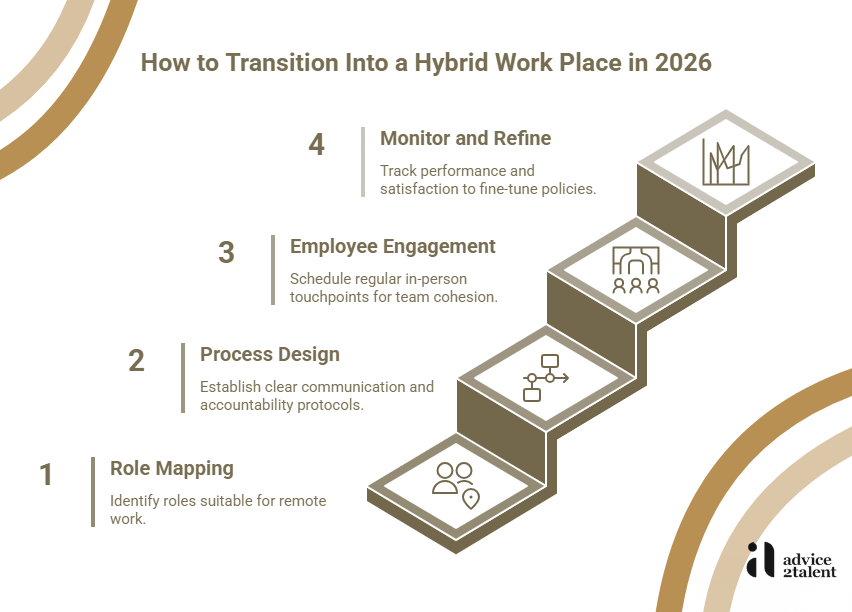
A structured plan ensures that flexibility supports productivity, team cohesion, and long-term growth. Implementing a hybrid work policy requires thoughtful planning. SMEs can follow these key steps:
Role Mapping
Not every role is equally suited to remote work, and that’s particularly true in service and hospitality businesses where frontline presence is core to the customer experience.
When conducting role mapping, SMEs should consider:
Roles involving direct, in-person customer service (e.g. hospitality staff, retail associates, technicians) typically require on-site presence.
Positions reliant on equipment, venue access, or physical inventory are less adaptable to WFH.
Administrative, finance, marketing, HR, booking coordination, and customer support roles are often well-suited to hybrid arrangements.
Some managerial roles may benefit from partial on-site presence to maintain visibility and operational control.
For service and hospitality SMEs, hybrid work may look different. For example, allowing rostering managers or marketing teams to work remotely while maintaining full on-site staffing for guest-facing roles.
The goal of role mapping is not to force remote work where it doesn’t fit, but to apply flexibility where it strengthens the business without compromising service standards.
Process and Policy Design
One of the most common concerns among SME owners is whether hybrid work will weaken training, mentorship, and capability development, especially for junior or newly hired staff.
In traditional office settings, learning often happens informally: employees observe conversations, ask spontaneous questions, and receive real-time feedback. When teams are partially remote, those organic learning moments require more structure.
To maintain strong development pathways in a hybrid model, SMEs can:
Schedule dedicated in-office collaboration days focused on training, onboarding, and mentoring.
Formalise coaching touchpoints through regular check-ins rather than relying on incidental desk-side guidance.
Document processes and create shared knowledge systems to reduce reliance on informal information flow.
Equip managers with hybrid leadership skills, ensuring they can effectively guide both remote and on-site employees.
Hybrid work does not eliminate mentorship, it shifts it from passive proximity to intentional design.
Businesses that build structured systems for learning and development can maintain strong capability growth while offering flexibility.
Employee Engagement
Schedule regular in-person touchpoints for mentoring, training, and team cohesion. Maintaining culture and connection is essential in hybrid arrangements to avoid disengagement and knowledge gaps.
Monitor and Refine
Large businesses often have greater resources to fully implement hybrid policies, while SMEs may face tighter margins and operational constraints. This doesn’t mean smaller firms can’t comply, but they may need to balance flexibility with commercial realities.
SMEs should track both business performance and employee satisfaction, reviewing productivity, service standards, and team engagement regularly. Where full flexibility isn’t viable, especially in service-based industries, businesses can strengthen other areas such as career development, recognition, and workplace culture.
By continuously measuring outcomes and adjusting policies, SMEs can design a hybrid model that remains competitive, sustainable, and aligned with their operational capacity.
A deliberate SME hybrid work strategy transforms legislative compliance into a competitive advantage. Businesses that plan thoughtfully can retain top talent, boost productivity, foster a positive culture, and remain agile in a shifting labor market.
Timing and Market Positioning Advantages
With the law coming into effect in September 2026, SMEs that plan proactively can gain first-mover advantages:
- Avoid operational bottlenecks
- Reduce administrative overhead
- Strengthen talent attraction and retention
Early adoption of hybrid, offshore, and AI-supported workflows positions SMEs as agile, future-ready businesses in Victoria’s evolving workforce landscape.
Insight
Planning hybrid work before the September 2026 mandate gives SMEs a first-mover advantage in attracting and retaining top talent in a competitive Victorian labor market.
Turning Legislative Change into Opportunity
The Victorian two-day WFH mandate is more than a compliance requirement, it is a strategic inflection point for SMEs.
Advice2Talent can help your business navigate this transition. Whether you’re designing hybrid work policies, integrating offshore teams, or implementing AI-supported workflows, our team works with SMEs to create workforce strategies that improve productivity, scalability, and engagement.
Contact us today to turn WFH legislation into a long-term business advantage.
Articles You Might Also Like

What SMEs Need to Know About Victoria’s Two-Day WFH Mandate
Victoria’s upcoming two-day WFH rights are set to impact SMEs from September 2026. Employees can work remotely two days a week, but businesses must plan strategically to maintain productivity, team cohesion, and compliance. Discover how hybrid policies, offshore teams, and AI workflows can turn legislative change into a competitive advantage.

Red Flags in Offshore Outsourcing Contracts
Offshore outsourcing agreements can contain hidden clauses that restrict hiring, increase costs, and create long-term dependency. This practical checklist highlights the contract red flags every business should review before signing with an offshore provider.

Fixing The Pay Gap in Offshore Hiring
If clients are paying premium offshore rates, why are many virtual assistants still underpaid? This case study explores how hidden pay gaps form, the risks they create, and how transparent pay structures can protect both businesses and offshore professionals.

Don’t Let Payroll Mistakes Hurt Your Business
Payroll errors can cost your business money, trust, and legal trouble. Discover the most common payroll mistakes to avoid—and how payroll virtual assistants can keep payments accurate, compliant, and stress-free.

Are Filipino Virtual Assistants Good for Australian Businesses?
Filipino virtual assistants aren’t just cost-effective, they bring strong English proficiency, cultural alignment, and long-term stability. This guide explores how Australian businesses can leverage offshore talent to boost productivity, reduce turnover, and scale sustainably.

Should I Look for a New Job Now? Key Tips for 2026
January sparks reflection for many professionals. Should you change roles now, or prepare first? This guide helps you decide, position yourself strategically, and explore career options—including remote and offshore opportunities.